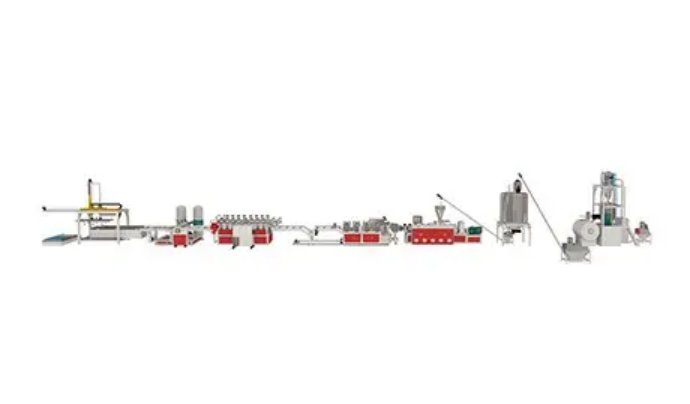
Improving labor efficiency in the modern industrial landscape is no longer just about harder work; it is about smarter integration. For manufacturers in the construction and advertising sectors, the production of rigid, lightweight sheets relies heavily on the technical synergy of the PVC foam board production line. By transitioning from semi-manual setups to fully integrated systems, companies can achieve a continuous workflow that significantly minimizes human error and downtime.
Optimizing Throughput with a PVC Foam Board Extrusion Line
An automated PVC foam board extrusion line operates as a synchronized unit, managing everything from material feeding and twin-screw extrusion to precision cutting and stacking. In traditional manufacturing, manual intervention at the calibration or hauling stages often leads to inconsistencies in board density and surface finish. Automation resolves this by employing PLC-controlled modules that maintain real-time monitoring of temperature and pressure. This high degree of precision ensures that a production line can operate with only 2–3 supervisors, effectively redistributing labor to high-value quality control tasks rather than repetitive physical handling.
Furthermore, the integration of advanced auxiliary equipment—such as automatic dosing systems and servo-controlled cross-cutting machines—drastically reduces material waste. Because the thickness and length are adjusted digitally, the margin for error is nearly eliminated, leading to a higher qualification rate and a faster return on investment for large-scale B2B operations.
High-Performance Solutions from Boyu
When it comes to industry-leading reliability, Boyu provides advanced extrusion solutions designed specifically for the rigorous demands of 2B business environments. Their PVC foam board production line is engineered for high-output efficiency, featuring customized configurations to meet diverse thickness and width requirements.
They utilize high-precision conical twin-screw extruders that ensure uniform plasticization, which is critical for the lightweight yet rigid structure required in high-end applications. Their equipment is widely recognized for its stable performance and energy-saving capabilities, helping manufacturers lower operational costs while maximizing daily output. By choosing their technology, businesses benefit from a system that balances durability with ease of operation, ensuring that labor efficiency remains a competitive advantage in a demanding global market.
