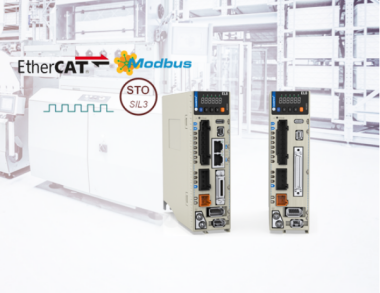
In the pursuit of ultimate performance in industrial automation, servo drives represent the high-performance tier of motion control. Paired with servo motors and drives, these systems deliver exceptional speed, torque, and precision, making them the default choice for demanding applications like robotics, high-speed packaging, and machine tools. However, implementing a servo-based motion system involves a careful evaluation of trade-offs. While the performance benefits are significant, the associated complexity and cost must be weighed against application requirements and budget constraints. Companies like Leadshine, which offer a comprehensive range of servo motors and drives, provide solutions that aim to maximize the pros and mitigate some of the traditional cons, making advanced servo technology more accessible. Understanding these advantages and disadvantages is crucial for engineers and system integrators to make an informed choice between servo, closed-loop stepper, and other motion technologies.
Unmatched Dynamic Performance and Precision
The foremost advantage of a servo drive system is its superior dynamic response. Servo systems are designed for closed-loop control with high-bandwidth feedback (typically from a resolver or high-resolution encoder), allowing for extremely rapid acceleration and deceleration, precise velocity regulation, and accurate positioning even under varying loads. Leadshine emphasizes this in their servo technology, noting features like “innovative anti-vibration algorithm reduces mechanical resonance” in their drives. This level of control ensures smooth operation at high speeds and contributes to higher throughput and superior end-product quality, which is a primary reason for selecting servo motors and drives for performance-critical applications.
Potential for Higher Maintenance and Feedback Sensitivity
The high-performance components in a servo drive system can have different maintenance profiles. The feedback device (encoder or resolver) is a critical and sensitive component. Contamination from dust, oil, or vibration can compromise its signal, leading to system faults or erratic behavior. While robustly packaged, these components are generally more delicate than the simple construction of a stepper motor. Additionally, the high-speed switching electronics in the drive and the precision bearings in the motor may require more careful environmental protection and periodic maintenance compared to some industrial stepper systems. This necessitates proper installation in appropriate enclosures, which is a factor system designers must account for when choosing servo motors and drive.
Energy Efficiency and Advanced Control Features
Modern servo drives are highly efficient. They draw current primarily proportional to the load demand, unlike stepper systems that often run at full current. This regenerative capability in many drives can also feed energy back to the power supply during deceleration. This leads to lower operational costs, reduced heat generation, and smaller power supply requirements. Moreover, contemporary drives come packed with advanced functionalities. Leadshine’s servo systems, for instance, include features that simplify integration and enhance performance, such as sophisticated motion profiling, electronic gearing, cam profiling, and seamless integration into fieldbus networks like EtherCAT. These features allow for the creation of complex, synchronized multi-axis systems—a task that would be exceedingly complex and costly with simpler drives, making the advanced servo drive a net simplifier for high-end applications.
Requirement for Careful Sizing and System Integration
Implementing a servo system is less forgiving of improper sizing than a stepper system. An undersized servo drive or motor will constantly fault due to overload, while an oversized system is unnecessarily expensive and may not tune well at low speeds. Proper inertia matching between the motor and the load is also more critical for optimal servo performance. This necessitates a more detailed engineering analysis during the design phase. Furthermore, integrating the servo drive into a larger control architecture requires careful planning around communication networks, safety circuits (like Safe Torque Off), and control interfacing. While a supplier like Leadshine supports this with a range of compatible drives (e.g., EL6-8 for general AC applications, ELD3 for robotic arms) and technical services, the integration effort is inherently greater than for a basic standalone stepper drive module.
Strategic Implementation with a Partner like Leadshine
The decision to implement servo drive is not a binary one. The key is to apply them where their pros are essential and their cons can be managed. For applications demanding high speed, dynamic response, precise synchronization, or high overload capacity, the pros of servo motors and drive overwhelmingly justify the investment. For simpler, slow-speed point-to-point moves, a closed-loop stepper may offer a better value proposition. Leadshine positions its servo technology strategically within its broader portfolio. By offering both high-performance servo systems and advanced closed-loop steppers, they allow customers to choose the right tool for the job. Their focus on features like compact design (enabling mounting near the point of use) and ease of use in their servo drive products directly addresses traditional complexity concerns, helping to mitigate the cons and make servo technology a viable and powerful option for a wider range of automation challenges.
In conclusion, servo drives offer unparalleled performance, efficiency, and advanced control for demanding motion systems, but they introduce higher cost, complexity, and integration requirements. The choice hinges on the application’s true needs. By understanding these trade-offs and partnering with a knowledgeable supplier like Leadshine, who provides reliable and increasingly user-friendly servo motors and drives, manufacturers can successfully harness the power of servo technology to build faster, more precise, and more competitive machinery, ensuring the investment delivers a clear return in enhanced capability and productivity.
