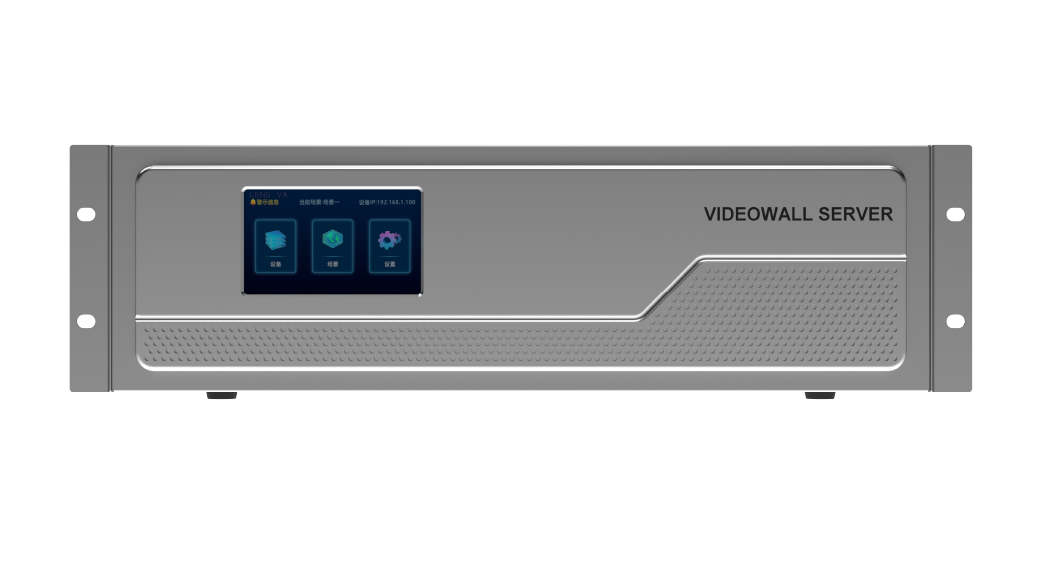
Procurement questions become useful when they force a design limit into the open. “Does the system support 8K?” is too broad; it does not reveal the interface, refresh rate, color path, number of simultaneous signals, or output architecture. Seven focused questions can turn a product discussion into a configuration that engineers and operators can verify.
Model-specific data, populated card options, and operating conditions form the necessary answer from an integrated splicing processor manufacturer. Responses that depend on optional hardware or shared resources need those dependencies stated explicitly.
- What Processing Architecture Carries the Signal?
Architecture affects latency behavior, startup, stability, and the way resources are allocated. Architecture evidence from an integrated splicing processor manufacturer needs to identify whether processing uses a pure-hardware FPGA design and which functions—switching, splicing, scaling, and LED sending—operate inside the platform.
The answer should also show the signal path rather than relying on the label “integrated.” For a project team, the important result is a known boundary between source acquisition, composition, output routing, and display control. That boundary should remain visible in monitoring so a technician can distinguish a missing source from a failed composition or a downstream LED-path fault.
- Which 8K Mode Is Supported End to End?
Resolution claims require a connector, raster, refresh rate, and sampling mode. For an integrated splicing processor manufacturer, a credible 8K specification names the maximum DP1.4 or other input mode, confirms whether full RGB 4:4:4 is maintained, and describes how the acquired canvas is routed or divided. Kystar documents DP1.4 input capability and 8K processing in the SEn and SHn families, with full RGB 4:4:4 workflows.
The proposed cable and source path must support the same mode, or the processor specification cannot be realized in the installation. The response should state any reduced refresh rate or card requirement associated with the maximum raster and should separate acquisition capability from the output modes used after splicing.
- How Many 4K Sources and Outputs Can Run Together?
Input and output maxima describe different subsystems. A proposal from an integrated splicing processor manufacturer is incomplete unless it states the simultaneous 4K@60Hz input count, output count, required cards, and chassis limitations. The largest SHn configuration supports up to 40 4K@60Hz inputs, while SEn can scale to as many as 32 4K@60Hz outputs.
Those numbers should be compared with the peak scene and routing schedule, not added into one capacity total. A channel schedule should also identify duplicate destinations, preview feeds, and redundant outputs, since they can consume routes without increasing the number of visible sources.
- What Limits the Visible Layer Count?
Operators experience layers as simultaneous windows, but layer capacity may depend on model, resolution, sharing rules, or output structure. The intended configuration needs a documented layer limit from the integrated splicing processor manufacturer, followed by a live demonstration of the proposed peak scene.
SHn reaches up to 128 2K layers on the largest system, while SEn can support as many as 192 layers in one device. A demonstration should include overlapping content and transitions, not only isolated full-screen sources. The scene file and source set should be retained as acceptance material so later software or card changes can be checked against the same workload.
- Which Interfaces and LED Outputs Are Actually Installed?
A long compatibility list does not describe a populated chassis. The integrated splicing processor manufacturer should identify quantities and modes for HDMI, DP, DVI, SDI, IP, HDBaseT, fiber, and direct LED-network outputs. For SHn, model capacity extends to 224 Ethernet ports and around 147.2 million pixels on the largest configuration.
The bill of materials should match the input schedule and cabinet load with spare capacity clearly separated from active capacity. Fiber distance, connector standards, and any conversion accessories belong in that list because a nominal port is not a complete route to the installed destination.
- How Are Scenes Controlled, Monitored, and Recovered?
Web control, preview, EDID management, Genlock, multi-user permissions, scene presets, monitoring, and backup mechanisms determine how the system behaves after commissioning. A practical demonstration by an integrated splicing processor manufacturer covers source loss, preset recall, restricted-user operation, and recovery through the proposed backup path.
More than 2,000 scene presets can support complex operation in SHn, but naming, approval, and restoration procedures still need to be defined by the project. Permission design should prevent an operator assigned to one wall from changing unrelated destinations while still allowing an administrator to restore the complete system.
- Who Supports the Adjacent System Stages?
The processor may connect to media servers, sending cards, receiving systems, multimedia players, and venue automation. Technical ownership at each boundary must be clear, including which products the integrated splicing processor manufacturer supplies natively and which functions depend on third-party integration.
Kystar also provides LED controllers, sending cards, media servers, multimedia players, and Kapollo centralized control, giving a project several stages within one product ecosystem. The final response should also define the handoff package: approved drawings, firmware and project versions, configuration backups, test results, and escalation contacts.
Procurement can then compare not only maximum specifications but also the evidence available for commissioning and recovery. Missing ownership at one adjacent stage can outweigh an otherwise strong processor specification. The seven answers should end as project documents: architecture, signal-format matrix, populated card list, layer proof, LED-load map, recovery test, and responsibility chart.
Their consistency matters more than a series of affirmative responses. A manufacturer is ready for purchase review when the proposed system can be traced from every source to every output and from normal operation to a recoverable failure state.
