A 3D dental printer can produce far more than basic dental models. As digital dentistry develops, 3D printing is being applied to surgical guides, splints, dentures, temporary restorations, impression trays, orthodontic models, and other dental applications. The main value lies not simply in producing physical objects, but in connecting digital design with a more efficient and repeatable production workflow.
For dental clinics and laboratories considering this technology, one of the most important questions is practical: what can a dental 3D printer actually produce, and which applications are suitable for a particular workflow? Understanding these applications can help users evaluate equipment, materials, and production requirements more effectively.
Dental Models for Diagnosis and Treatment Planning
Dental models remain one of the most common applications for 3D printing for dental workflows. Digital impressions captured with an intraoral scanner can be converted into printable models without relying on traditional impression materials and manual model fabrication.
Printed models can support diagnosis, treatment planning, patient communication, restorative workflows, and laboratory procedures. Depending on the application, users may need different model materials for general dental models, orthodontic models, or models that reproduce gingival structures.
SHINING 3D DENTAL offers dental model and orthodontic model resins designed for these applications, supporting the transition from digital scan data to physical models.
Surgical Guides for Implant Workflows
Implant treatment often requires careful planning before surgery. A digital workflow can combine scan data with implant planning software to create a surgical guide based on the planned implant position.
A 3D dental printer can then manufacture the guide from a suitable surgical guide resin. The resulting component can support the planned procedure by transferring digital planning information into a physical format.
This application also demonstrates why printer selection cannot be separated from material selection. Surgical guide applications have specific requirements for material properties, accuracy, post processing, and intended use. SHINING 3D DENTAL currently provides dedicated surgical guide resins as part of its dental material portfolio.
Temporary Crowns and Bridges
Temporary crowns and bridges are another important application for dental 3D printing. Digital crown and bridge designs can be prepared from intraoral scan data and subsequently produced using compatible dental resins.
Compared with workflows that rely heavily on manual fabrication, digital production can make the process more systematic. It can also facilitate the reproduction of digital designs when a case needs to be remade or adjusted.
SHINING 3D DENTAL lists temporary crown and bridge, semi-permanent crown, and provisional All-on-X materials among its dental printing applications. The appropriate material should always be selected according to its approved indications and the requirements of the specific workflow.
Dentures and Try-In Applications
Denture production is another area where digital workflows can reduce repetitive manual steps. Digital denture designs can be translated into printed denture components, while try-in materials can be used to evaluate aspects of a planned restoration before final fabrication.
For laboratories handling multiple denture cases, digital files can also provide a consistent reference throughout the workflow. This can make case management easier and allow designs to be stored for future use or modification.
SHINING 3D DENTAL’s current material portfolio includes try-in denture base materials and denture base resins, supporting different stages of digital denture workflows.
Occlusal Splints and Orthodontic Applications
Occlusal splints require accurate reproduction of the patient’s dental anatomy and appropriate material characteristics. With a digital workflow, the appliance can be designed from scanned dental data and then manufactured through 3D printing.
Both hard and soft splint applications can be supported by dedicated materials, depending on the intended use. Orthodontic models are another practical application, particularly when digital scan data needs to be converted into physical models for analysis, appliance fabrication, or workflow reference.
SHINING 3D DENTAL provides both hard and soft splint materials as well as orthodontic model resin, giving users different material options for these applications.
Custom Impression Trays and Indirect Bonding Trays
A dental 3D printer can also produce workflow tools such as custom impression trays and indirect bonding trays. These applications demonstrate that 3D printing is not limited to final or temporary dental products.
Custom impression trays can be designed according to digital patient data and produced with a suitable tray resin. Indirect bonding trays can similarly be digitally designed and printed to support orthodontic procedures.
By producing these components directly from digital files, dental teams can integrate fabrication more closely with their existing scanning and design processes. SHINING 3D DENTAL includes both custom impression tray and indirect bonding tray materials within its current application range.
Gingiva Masks and Implant Model Applications
Implant workflows sometimes require more than a standard hard-tissue model. A gingiva mask can reproduce soft-tissue contours around implant areas, helping users visualize anatomical relationships during planning and restorative procedures.
This is particularly useful when a physical model needs to represent both the dental structures and relevant gingival anatomy. SHINING 3D DENTAL offers gingiva mask resin designed for this type of application.
Such applications show how the combination of multiple materials can expand what a single digital printing workflow can accomplish.
Can One 3D Dental Printer Handle Different Applications?
This is one of the most practical questions when selecting equipment. The answer depends on the printer’s technology, build volume, supported materials, software, workflow requirements, and intended applications.
A system designed only for basic models may not provide the same material options or workflow capabilities required for surgical guides or dental restorations. Therefore, users should evaluate the entire ecosystem rather than focusing on one specification such as resolution.
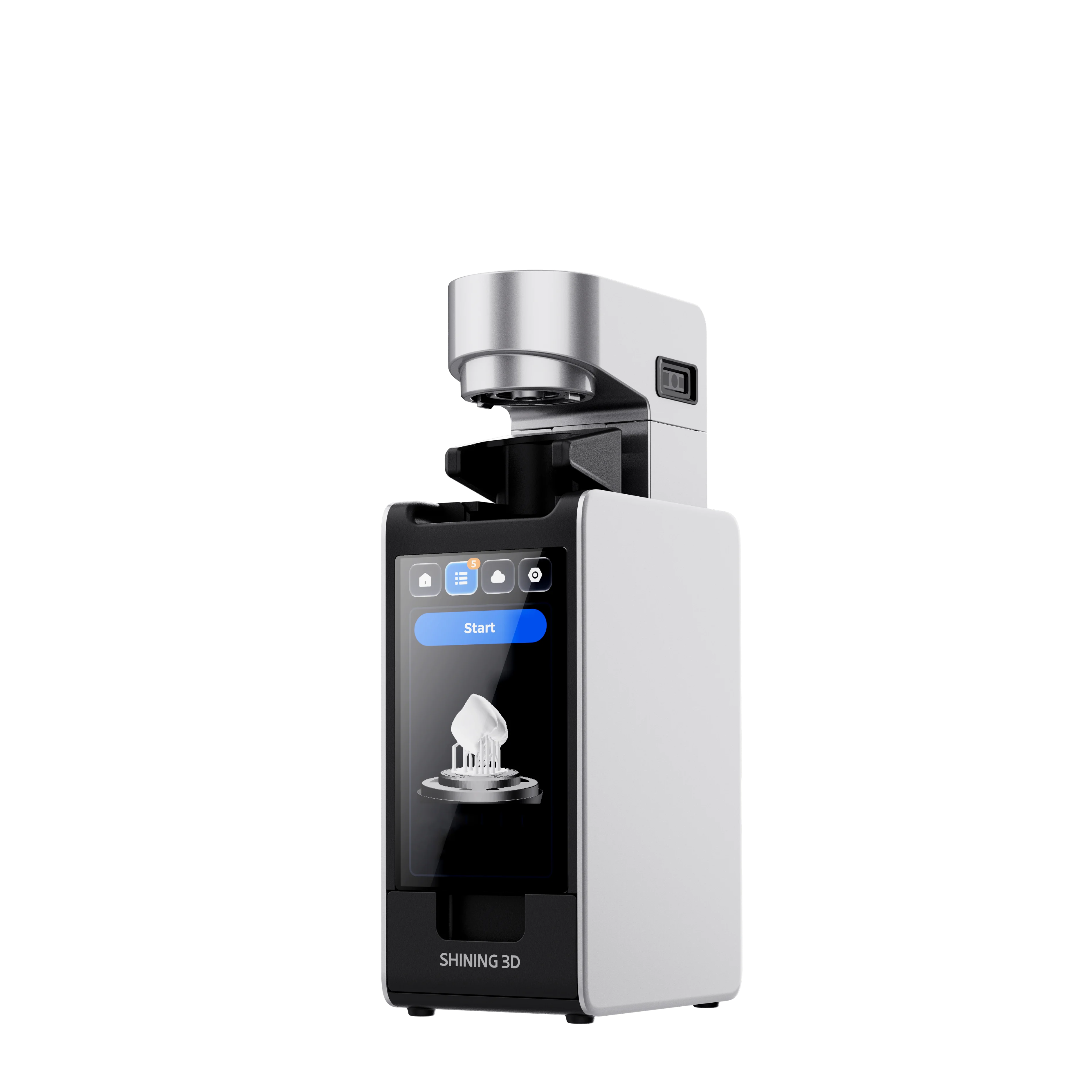
SHINING 3D DENTAL currently offers both DLP and LCD dental printing technologies. Its portfolio includes systems such as AccuFab-F1, Ceramix-Nano, AccuFab-CEL, and AccuFab-Aris, with different configurations for various dental workflows.
An open material system can also provide greater flexibility when different applications are required. SHINING 3D DENTAL states that its dental printer portfolio supports a range of resin materials for different applications.
What Else Should Be Considered Besides the Printer?
Successful dental 3D printing depends on more than the printer itself. The complete workflow typically includes scanning, digital design, slicing, printing, washing, curing, finishing, and quality inspection.
Post processing deserves particular attention because printed parts often require controlled washing and curing before they can be evaluated or used. SHINING 3D DENTAL offers post processing systems including FabWash, FabCure N2, and FabCure 2 as part of its broader printing ecosystem.
Users should also consider software compatibility, material availability, operator training, maintenance requirements, production volume, and the regulatory status of materials for their intended applications. These factors can have a greater impact on daily workflow efficiency than printer specifications alone.
Choosing the Right Application for Your Workflow
The best way to evaluate a 3D dental printer is to start with actual production requirements. If models represent most of the workload, model accuracy and production efficiency may be the primary considerations. If the workflow includes implants, splints, dentures, temporary restorations, or orthodontic applications, broader material and software compatibility becomes increasingly important.
SHINING 3D DENTAL provides an integrated digital dentistry ecosystem covering scanning, design, printing, materials, and post processing, with its current printer portfolio supporting a range of dental applications.
Ultimately, 3D printing for dental applications is most effective when the printer, material, software, and post processing workflow are selected as a complete system. By starting with the applications that matter most and then evaluating the technology required to support them, dental teams can make more informed equipment decisions and build a practical digital production workflow that can adapt to changing case requirements.
