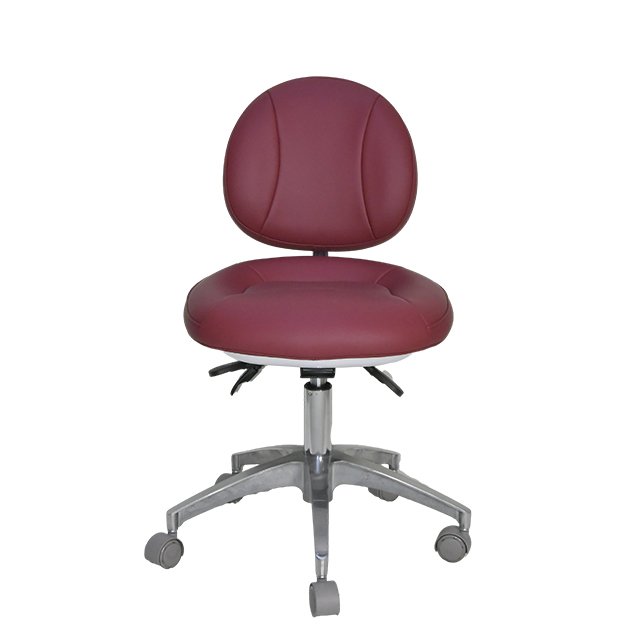
A comprehensive examination of clinical seating requires analyzing the individual components that form the complete assembly. Every mechanical part of a dental stool directly contributes to structural stability, operational safety, and the long-term physical comfort of clinical personnel during demanding operatory procedures.
Evaluating equipment construction helps commercial buyers understand how individual engineering choices impact overall product performance. High-quality seating relies on precise component manufacturing, ensuring that every internal column, outer shell, and adjustment joint performs reliably under constant, multi-shift daily use across busy clinics.
Structural Base and Mobile Framework Engineering
The foundational component of any seating unit is the five-star base assembly. Manufactured primarily from high-tensile cast aluminum alloy, this wide base establishes a low center of gravity, effectively preventing accidental tipping during rapid physical movements across active operatory floor environments.
Mounted beneath the base structure are specialized, heavy-duty caster wheels engineered for smooth mobility. High-density polyurethane rollers reduce rolling friction, allowing clinicians to maneuver quietly around patient treatment areas without collecting dust, hair, or liquid debris inside the wheel housings over time.
Rising above the base is the central pneumatic lift cylinder, which governs vertical elevation adjustments. A certified class-4 gas lift spring maintains consistent internal hydraulic pressure over years of continuous operation, enabling precise height changes to accommodate various operator statures during clinical tasks.
Internal cylinder seals and chrome-plated steel shafts prevent pressure leakage and structural play over time. Precision engineering within the lift column guarantees fluid vertical motion, minimizing sudden dropping or rigid mechanical resistance when adjusting the seat to align with different patient chair positions.
Cushion Contours and Dentist Stool Ergonomic Systems
Directly attached to the lift column is the seat pan assembly, which bears the primary body weight of the practitioner. Structural steel reinforcement within the pan prevents warping under load, providing a rigid platform that supports proper pelvic orientation during extended restorative and surgical interventions.
Layered atop the seat pan is high-density, cold-molded memory foam padding designed for optimal support. This specialized foam formulation distributes body weight evenly, reducing focal pressure points on the thighs while maintaining its original structural shape and firm support despite thousands of hours of usage.
Equipment engineered by Roson incorporates anatomically contoured cushioning that supports healthy pelvic alignment. Proper contouring minimizes excessive pressure along the hamstring muscles, promoting unimpeded lower-body blood circulation for clinicians seated throughout long, complex treatment schedules across demanding operational days.
An essential element of a dentist stool ergonomic configuration is the multi-directional torso and lumbar support assembly. Mounted on a heavy-duty pivoting joint, this backrest swivels smoothly, offering continuous abdominal or lower back stabilization depending on the practitioner’s changing working posture.
The internal tilting mechanism allows users to adjust backrest resistance and angle independently. Precision locking levers maintain selected positioning securely, preventing unexpected slippage when a clinician leans forward during delicate instrumentation passes, detailed intraoral examinations, or prolonged operative dental care.
Auxiliary Supports and Materials Processed by Roson
Complementing the torso support are adjustable armrests and elevated foot rings in specialized configurations. These auxiliary components stabilize the upper limbs and elevate the feet, maintaining neutral knee angles and reducing upper shoulder compression during tedious clinical procedures in modern practices.
Enclosing the internal padding and framework is medical-grade, fluid-resistant synthetic upholstery. Manufacturing processes at Roson ensure that upholstery seams remain tightly sealed, preventing chemical sanitizers, water, or bodily fluids from penetrating into the underlying foam matrix during routine decontamination protocols.
Advanced synthetic leather formulations provide high tensile strength and tear resistance under demanding conditions. The outer material retains flexibility while resisting surface cracking, fading, or peeling caused by frequent exposure to hospital-grade disinfectant sprays and rapid wiping protocols between patient appointments.
Beneath the seat pan lie the primary mechanical adjustment levers, constructed from durable composite or cast metal alloys. Intuitive placement allows clinicians to locate and operate height and tilt controls effortlessly without breaking line-of-sight during active clinical procedures or patient care.
Assembly Precision and Quality Verification
The quality of these control linkages determines the tactile feedback and operational longevity of adjustment mechanisms. Robust linkage construction prevents cable stretching or joint loosening, ensuring crisp, reliable lever action throughout the multi-year commercial service life of the equipment in high-volume operatories.
Integrating these precise components into a cohesive dentist stool ergonomic solution requires strict manufacturing oversight. Quality management systems ensure that every mechanical joint, gas cylinder, and foam layer meets exact dimensional tolerances and safety criteria before final commercial export packaging.
Tracking component batches through digital production systems allows Roson to verify structural consistency across large product shipments. Complete component traceability guarantees that every dental stool delivered to global buyers satisfies strict international safety standards, regulatory compliance metrics, and performance expectations.
Evaluating these individual building blocks enables facility procurement teams to make well-informed purchasing decisions. Investing in well-engineered components minimizes mechanical failure rates, reduces ongoing facility maintenance costs, and ensures lasting ergonomic support for clinical support staff across all operatory departments.
Ultimately, the overall reliability of operatory seating reflects the quality of its underlying structural components. Prioritizing robust engineering across bases, cylinders, cushioning, and support mechanisms creates a safer, more productive working environment for modern healthcare practices and commercial medical distributors.
