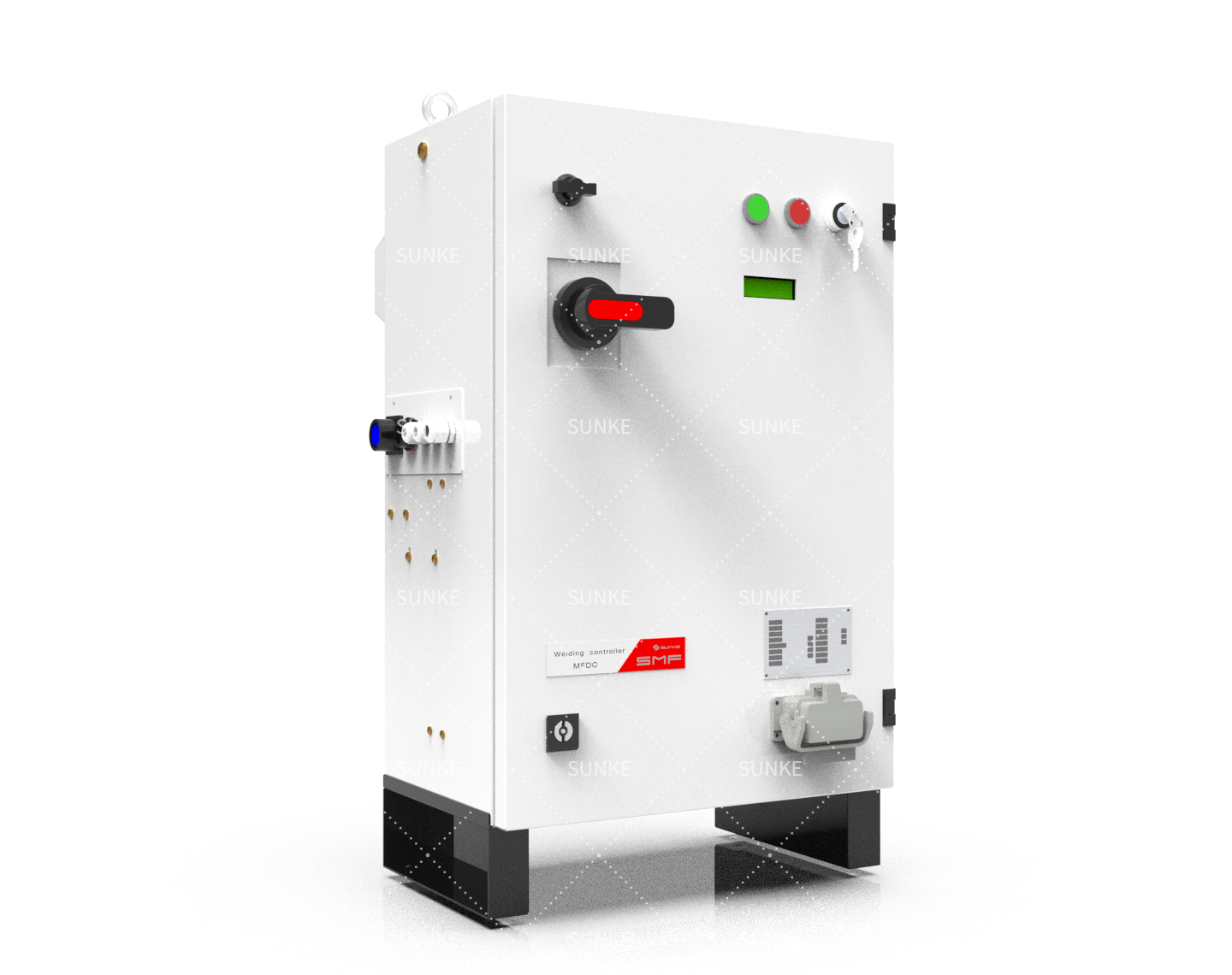
Automotive production depends on thousands of joints that must withstand vibration, impact, and years of service. Even a small variation in weld quality can create rework, interrupt line flow, or affect downstream assembly. A spot welding controller helps regulate the electrical cycle that forms each joint, making it especially valuable in body-in-white (BIW) manufacturing and battery production. Its role extends beyond switching current on and off: coordinated timing, repeatable parameters, and process monitoring all influence the reliability of automated welding operations.
Body-In-White Structural Assembly
BIW production joins stamped steel panels into the vehicle’s underlying structure, including floor assemblies, pillars, roof sections, and door frames. Resistance spot welding suits these operations because it can create localized joints quickly without adding filler material. Consistent current delivery and electrode timing help maintain weld quality across large numbers of repetitive joints.
A resistance welding controller coordinates the welding sequence according to the selected schedule. Engineers must account for sheet thickness, steel grade, coatings, electrode condition, and clamping force when setting parameters. If these variables change, the same electrical settings may produce different results, so validation on representative material stacks remains essential.
Battery Module and Pack Assembly
Battery manufacturing presents a different set of challenges because conductive tabs, busbars, and cell connections can be sensitive to excessive heat or mechanical stress. The suitable joining method depends on cell format, material combination, joint geometry, and the electrical requirements of the finished assembly. Spot welding may be appropriate for certain tab and component configurations, although laser welding or other processes may suit different battery designs.
For applications using resistance spot welding, a spot welding controller helps regulate pulse duration and current delivery to limit process variation. Engineers should assess material compatibility, heat-affected areas, electrical resistance, and joint strength before approving a production recipe. Battery assembly also benefits from traceable process records, since an inconsistent connection can affect electrical performance as well as mechanical integrity.
Seat Frames and Interior Structures
Seat frames, brackets, and selected interior support components often combine formed metal parts with multiple overlapping joints. These assemblies need repeatable welds while maintaining the dimensional tolerances required for later installation. A stable welding cycle helps reduce variation that could otherwise complicate fixture release or downstream fitting.
A resistance welding controller can store different schedules for joints that vary in material thickness or geometry. This capability is useful when one station processes several component variants, provided each recipe is validated and protected against unintended changes. Routine inspection of electrodes and fixtures remains important because wear, misalignment, or contamination can affect weld formation even when the programmed settings remain unchanged.
Suspension and Chassis Components
Selected brackets, reinforcements, and chassis-related assemblies use resistance spot welding where joint design and material specifications permit. These components may face cyclic loads, vibration, and demanding service conditions, making weld integrity an important part of structural performance. The process must be developed around the actual load path and applicable engineering requirements rather than production speed alone.
A properly configured spot welding controller supports repeatable delivery of current and weld time across successive parts. However, controller settings cannot independently establish joint suitability. Weld testing, dimensional checks, destructive sample evaluation, and process monitoring help confirm that the selected schedule performs consistently under production conditions.
Robotic Welding Cells and Flexible Production Lines
Automotive factories frequently combine robots, fixtures, sensors, and welding equipment in automated cells. In these environments, the controller must respond predictably to commands from the line control system and provide useful status information. Reliable communication helps coordinate the weld cycle with robot position, clamping sequence, and part verification.
In robotic spot welding applications, adaptive resistance welding control can help address changes in sheet thickness, surface conditions, and electrode wear that may affect weld consistency during continuous production.
Modern MFDC control systems may offer extensive programmable schedules and industrial fieldbus connectivity. Sunke’s medium-frequency DC resistance welding controllers support more than 256 programmable weld schedules and provide industrial bus integration options, features that can help manufacturers manage varied welding tasks within automated environments. Actual compatibility depends on the controller configuration, communication protocol, and the plant’s existing automation architecture.
Quality Monitoring and Process Troubleshooting
Weld defects can arise from several sources, including unsuitable current levels, worn electrodes, inconsistent force, contaminated surfaces, and incorrect part positioning. A controller provides one part of the information needed to investigate these problems, but reliable troubleshooting also requires mechanical inspection and weld testing. Looking at several process variables together is more useful than adjusting current whenever a defect appears.
A resistance welding controller with suitable monitoring and diagnostic functions can help engineers identify deviations from approved schedules. Production teams should define acceptable parameter ranges, document recipe changes, and establish inspection intervals based on actual operating conditions. This approach supports earlier investigation of process drift and reduces the risk of repeating the same fault across an entire batch.
Conclusion
The six applications illustrate how resistance welding requirements vary between vehicle structures, battery connections, interior assemblies, chassis components, automated cells, and quality-control operations. Selecting a spot welding controller calls for more than checking its rated output; material behavior, cycle requirements, integration options, and validation methods all deserve attention.
Sunke provides MFDC control solutions for industrial welding environments, giving engineers options to assess against specific process and automation needs. A carefully validated setup, supported by consistent maintenance and useful production data, offers a sound basis for repeatable weld quality.
