Polymer processing facilities spanning different industrial segments keep seeking practical ways to boost production efficiency and material performance while sustaining reliable dimensional control. Plant managers, technical directors and production engineers often examine one core question: How do variations within rubber vulcanization workflows affect the mechanical strength, elasticity and service life of elastomer parts made in high-volume runs?
To reach desirable cross-linking results, operators typically maintain close oversight of temperature curves, clamping pressure and vulcanization cycle duration. Precise coordination of these three core process variables defines curing uniformity, directly determining whether finished rubber products meet basic industrial usability standards. When assessing equipment partners for these advanced production needs, procurement teams may review suppliers such as HWAYI, which serves customers in many regions and supplies CE-certified machinery with relevant technical support.
Furthermore, HWAYI works to meet varied technical requirements across different manufacturing sectors and supports consistent operational results for its customers. Stable, repeatable vulcanization processes form a key foundation for standardized rubber production, and can influence product service life, weather resistance and structural performance over extended service cycles.
Uncontrolled curing conditions often lead to inconsistent hardness, poor compression resistance, and early aging failure of finished rubber parts, severely affecting product qualification rates and market credibility. Even minor deviations in heat distribution or pressure holding time can accumulate into large-scale batch defects, resulting in increased production costs and delayed order delivery for manufacturing plants.
The transformation of raw elastomer compounds into robust, finished products hinges on the fundamental science of vulcanization. During this critical manufacturing phase, polymer chains undergo chemical cross-linking under controlled heat and pressure, shifting the material from an unformed plastic state to a high-performance elastic state.
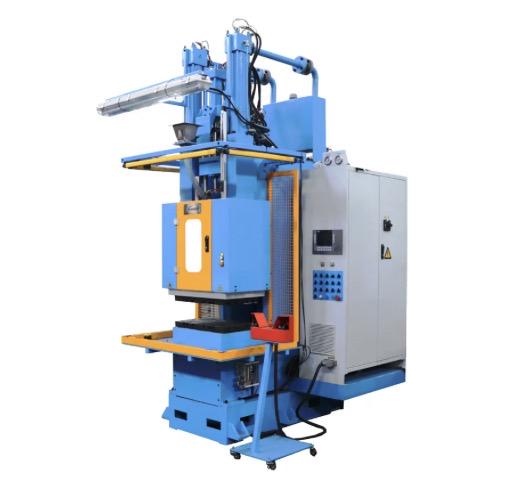
Traditional manufacturing setups often struggle with uneven thermal distribution or inconsistent clamping forces, which can introduce microscopic voids or surface imperfections into molded batches. Modern facilities successfully address these operational challenges by integrating a dependable rubber vulcanizing machine equipped with programmable logic controls and multi-zone heating capabilities. Such advanced equipment can deliver consistent thermal input for each production run, helping reduce typical processing defects and meet applicable industrial quality requirements during continuous operation.
Optimizing Thermal and Pressure Parameters in Polymer Processing
Technical teams frequently investigate how specific machine parameters affect overall output quality during continuous manufacturing campaigns. Maintaining stable cavity pressure prevents material slippage and reduces flash formation, ultimately saving valuable finishing time and reducing material waste.
Minor fluctuations in temperature and pressure throughout the curing cycle can gradually alter cross-linking uniformity across molded rubber parts. In mass production environments, even subtle parameter drift can accumulate over dozens of production cycles, creating inconsistent physical performance between early and late batches. For this reason, modern rubber processing prioritizes steady, repeatable parameter control rather than relying on fixed static settings for all production runs. Consistent thermal and pressure stability helps standardize curing conditions, unifying part quality across long-duration manufacturing operations.
Furthermore, advanced hydraulic systems allow engineers to fine-tune closing speeds and holding pressures according to specific polymer formulations and intricate mold geometries. Whether a facility processes general-purpose compounds or specialized high-performance elastomers, utilizing a precise rubber mold vulcanizer provides the operational flexibility needed to adapt to shifting production demands without requiring excessive reconfiguration downtime or extensive operator intervention.
To understand the value of refined vulcanization parameter tuning, it helps to look at how temperature and pressure settings shape processing results. For automotive elastomer components including sealing strips, dust boots, door seals, and O-rings, consistent vulcanization relies heavily on well-calibrated cavity pressure and thermal profiles.
Carefully tuned rubber vulcanizing equipment supports controlled cavity filling and stable curing conditions. Proper adjustment of these core parameters can help produce parts with reliable tensile properties and flexibility, while slowing performance loss under cyclic thermal and mechanical loads.
Ensuring Safety and Reliability in Electrical Transmission
Power and electrical transmission projects impose strict quality expectations on safety-related elastomer components such as electrical insulators, lightning arresters, hollow bushings, and T-type connectors. The dielectric performance of these parts is closely tied to vulcanization outcomes: uneven curing may create internal voids or inconsistent cross-linking, raising the risk of electrical breakdown under high voltage.
Purpose-built vertical press setups help energy-sector producers achieve consistent material density across thick-walled profiles. With a well-calibrated rubber mold vulcanizer, engineers can adjust curing parameters to suit the specific dielectric rubber compound they use. Thoughtful control over temperature gradients and cycle timings supports stable curing quality, helping manufacturers meet relevant international safety and performance specifications.
Even well-configured vulcanization equipment depends on proper upkeep to hold stable process conditions over time. Regular maintenance, spare part access and process training help operators preserve consistent curing results and avoid unplanned interruptions that disrupt vulcanization batches.
Suppliers with relevant technical resources can provide remote process troubleshooting and installation training, helping production teams maintain reliable curing control and extend equipment service life.
Refined command of vulcanization fundamentals gives manufacturers a practical route to improve consistency and lower scrap. By matching process parameters, equipment selection and technical guidance to component requirements, rubber processors can build more stable production workflows and sustain competitiveness in global industrial markets.
