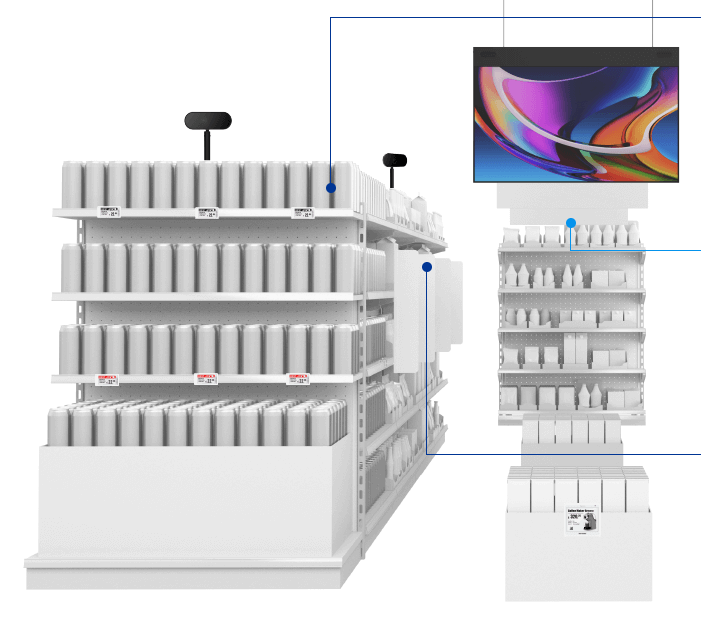
As stores increase their level of digitalization through additional layers of IoT devices, systems, and networks, it can quickly become a complex and disconnected web of technology. The electronic shelf label software that controls pricing and device management must therefore feature an interface designed for clarity, speed, and scalability. Without intuitive user design, even the most advanced electronic shelf label system will lead to errors and low adoption. Best practices for ESL cloud platforms focus on real-time visibility, batch operations, and flexible deployment. Understanding these principles helps retailers choose electronic shelf label software that empowers staff rather than frustrates them.
Real-Time Dashboards with Clear Device Status
A well-designed electronic shelf label software interface starts with a dashboard that shows every electronic shelf label’s status at a glance. Color-coded indicators for battery level, communication health, and pending updates reduce troubleshooting time. The best ESL cloud platforms process millions of data points simultaneously, enabling smooth filtering by store, aisle, or product category. Fast data transmission is critical here—Hanshow’s self-developed communication protocol can transmit data efficiently in dense environments, with a single base station supporting over 3,000 concurrent electronic shelf label devices. This speed ensures that the software interface reflects real-time conditions without lag.
Batch Operations and Scheduling for Efficiency
Retail staff need to update hundreds or thousands of electronic shelf label units at once. Best practices for electronic shelf label software include drag-and-drop category selection, template-based price rules, and scheduled batch refreshing. The interface should allow users to preview how each electronic shelf label will appear after an update, preventing costly mistakes. A powerful ESL cloud system integrates processing for millions of data records, enabling seamless execution of complex promotional calendars across entire store chains.
Flexible Deployment and Unified Access
Modern electronic shelf label software must accommodate different retail IT strategies. Best practice interfaces offer both SaaS (ESL cloud) and private deployment options. Crucially, both deployment methods should support unified user authentication and third-party application access integration. This allows staff to log in once and manage pricing, inventory, and electronic shelf label tasks from a single portal. The interface should not distinguish between cloud and on-premise backends—users experience the same workflow regardless.
Hanshow: Delivering User-Centric ESL Software
For retailers seeking electronic shelf label software with intuitive design, fast data transmission, and flexible deployment, Hanshow provides the answer. Hanshow’s ESL cloud and private solutions feature unified authentication, third-party integration, and the performance to process millions of data points. By choosing this company, businesses equip their teams with electronic shelf label software that reduces complexity and drives accurate, efficient store operations.
