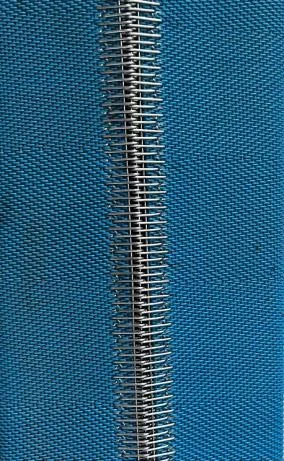
Operational efficiency in material handling networks relies heavily on choosing appropriate pivot hardware to connect mechanical splices. Engineers regularly evaluate whether polymer-coated rods or solid metal connectors provide better service longevity under specific conveyor speeds and load demands. A high-tensile conveyor belt hinge pin serves as the central load-bearing axis, enabling mechanical joints to flex repeatedly over drive drums without premature shear failure.
Selecting between synthetic and metallic materials involves balancing flexibility, abrasion resistance, chemical exposure, and tensile capacity. Analyzing these material characteristics helps maintenance managers optimize splice performance across diverse material handling operations.
Structural Principles of Flexible Mechanical Splices
Mechanical belt splicing relies on intermeshing wire loops or metallic plates anchored securely into belt carcass ends. A central conveyor belt hinge pin joins these opposing loops together, forming a continuous articulated joint that transmits tensile forces evenly.
Flexing action as belting travels around head and tail pulleys generates constant friction along the central pivot axis. Material toughness within the connector rod determines how well the joint resists surface grooving and fatigue under continuous operation.
Mechanical Characteristics of Polymer-Coated Connecting Rods
Nylon-covered steel cables offer high lateral flexibility, allowing mechanical joints to adapt easily to troughed belt profiles. The outer synthetic jacket cushions metal-on-metal contact between the rod and fastener loops, reducing operational noise during high-speed transit.
Polymers also shield internal steel strands from direct moisture ingress, delaying corrosion in mildly damp operating conditions. Flexible nylon hinge pins bend smoothly around small pulley diameters, minimizing bending stress along the joint line.
Load Limits and Wear Dynamics of Synthetic Materials
High dynamic tension or abrasive particulate buildup accelerates polymer cover wear, exposing internal wire cores to localized friction. Once synthetic coatings erode, bare steel strands suffer rapid abrasion against metallic fastener loops, leading to sudden joint distortion.
Heavy-duty material transport often exceeds the shear strength limits of lightweight synthetic connectors. Industrial facilities processing sharp minerals or heavy packages usually require solid metallic rods to handle severe tensile loads. Selecting a metal pin over a synthetic alternative in these demanding applications also eliminates the risk of polymer cold-flow deformation under sustained high loads, ensuring that hinge geometry remains stable throughout the conveyor’s operating cycle and preventing the gradual loosening that often precedes splice failure.
Metallurgical Advantages of Solid Stainless Steel Pins
Metallic connectors made from 304S stainless steel can provide good corrosion resistance and dimensional stability for mechanical fastening applications. High chromium alloy content prevents metal oxidation, ensuring smooth articulation in high-humidity or chemical washdown environments.
Solid stainless hinge pins maintain dimensional stability under extreme mechanical pull, preventing joint elongation over extended operating cycles. Rigid metallurgical properties resist severe notch wear caused by abrasive fine particles entering the joint assembly.
Technical Specifications of 304S Metal Connecting Rods
Heavy industrial applications benefit from standardized metallurgical hardware engineered for demanding mechanical environments. Standard Hinge Pin units crafted from 304S stainless steel weigh approximately 0.72KG per piece, offering substantial structural mass for heavy-duty conveying tasks.
Supplied in standardized packaging specifications of 12 Pcs/Box, these 304S stainless steel rods allow maintenance personnel to store compact replacement inventory on site. Standardized unit packaging protects components from contamination before installation. Clear product labeling on each box, including material grade and lot number, further simplifies traceability for quality audits and ensures that only verified components are deployed during critical repairs.
Procurement Criteria and Technical Sourcing Considerations
Selecting appropriate mechanical joint components involves analyzing belt thickness, operating speed, pulley diameters, and material moisture levels. Industrial hardware suppliers like Intake provide conveyor fastening components for different mechanical splicing requirements.
Accessing comprehensive technical documentation simplifies component selection for maintenance engineering teams. Dependable supply networks established by Intake ensure plant managers secure compatible joint hardware to maintain continuous processing capacity.
Operational Lifespan Comparison in Challenging Environments
Chemical exposure and severe ambient temperatures alter material properties, affecting connector rod performance over time. While nylon covers degrade when exposed to harsh industrial solvents or high heat, stainless steel hardware retains its structural integrity.
Deploying quality components from Intake protects conveyor drive components by maintaining consistent joint alignment across every flex cycle. Solid metal rods prevent pin migration, safeguarding belt scrapers and pulley lagging from severe physical impact.
Selecting the Optimal Material for Facility Needs
Evaluating application conditions guides technical teams toward the correct pivot rod material. Light-duty package handling systems benefit from the quiet, flexible operation of polymer-coated cables, while heavy bulk material lines require solid stainless steel rods.
Hardware provided by Intake helps plant operators align connector specifications with exact operational loads. Selecting durable materials minimizes emergency joint repairs, supporting long-term productivity across complex material handling networks.
Conclusion
Choosing between synthetic and stainless steel pivot hardware requires balancing system load, environmental exposure, and operational speed. Technical buyers preserve continuous throughput and minimize maintenance overhead by matching connector rod metallurgy directly to specific industrial conveyor requirements.
