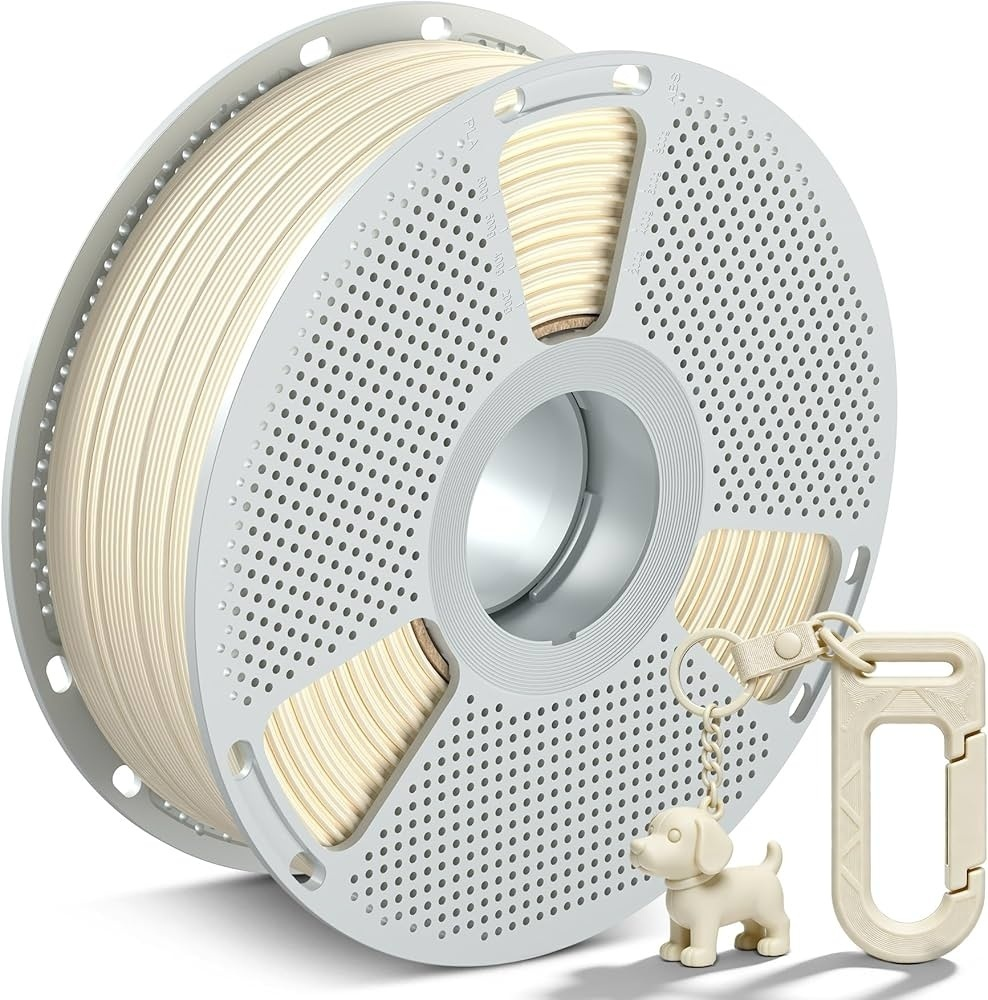
Choosing a 3d print filament for an engineering component starts with understanding how the finished part will be used. A bracket, flexible hinge, heat-exposed enclosure, and precision prototype all have different material requirements.
Engineering filaments offer a range of mechanical and thermal properties, but selecting a suitable option involves more than comparing prices or strength ratings. Buyers should consider operating conditions, dimensional accuracy, printer compatibility, and the total cost of producing usable parts.
- Start With the Part’s Mechanical Requirements
Consider the forces the component will experience. Tensile strength measures resistance to pulling; flexural strength, resistance to bending; impact strength, resistance to sudden blows; and elongation at break, how much a material stretches before fracturing. Stiffness is critical for parts that must retain shape under load.
The intended application determines which properties deserve priority. A rigid mounting fixture may require high stiffness, whereas a clip that opens and closes repeatedly may need greater flexibility and fatigue resistance.
When comparing engineering filaments, also account for print orientation, wall thickness, infill, and the direction of applied loads. Material test results provide useful reference points, but they do not fully predict the performance of every printed design.
- Compare Heat Resistance and Environmental Durability
Temperature and environment affect performance. Heat deflection temperature (HDT) compares how materials deform under heat and a defined load—but it’s not a universal continuous-use limit. Always evaluate operating temperature, exposure duration, and mechanical load together.
Moisture, chemicals, ultraviolet light, and repeated flexing may also influence material selection. Nylon, for example, absorbs moisture, which can affect filament handling and dimensional stability.
Polycarbonate and PC-ABS may suit some heat-exposed applications, while polypropylene can be relevant for lightweight parts requiring chemical resistance. Before selecting a 3d print filament, compare the manufacturer’s technical data with the actual environment in which the component will operate.
- Match the Material Family to the Application
Different polymers and reinforcements offer distinct combinations of performance characteristics. Carbon-fiber-reinforced nylon can provide rigidity and strength for structural parts, while glass-fiber-reinforced nylon may be suitable when stiffness and dimensional stability matter.
Polycarbonate offers a balance of strength, toughness, and heat resistance. PC-ABS combines characteristics of polycarbonate and ABS, while polypropylene is valued for its low density and fatigue resistance.
For example, SUNLU PA12-CF contains 20% carbon fiber and lists a heat deflection temperature of 175 ± 3°C. Its product information highlights rigidity and dimensional stability for engineering applications.
These characteristics may suit some structural components, but the right material still depends on the required loads, geometry, and working environment. Compare the full technical data sheet rather than choosing by material name alone.
- Check Dimensional Accuracy and Printability
Parts with threaded holes, precise interfaces, or tight assembly tolerances need consistent dimensions. Shrinkage, warping, moisture, and extrusion variation can affect fit and shape. Check the filament diameter tolerance and available dimensional-stability information, particularly when a component needs to mate with manufactured parts.
Reinforced engineering filaments require additional attention because carbon or glass fibers can increase nozzle wear. A wear-resistant nozzle may be suitable for abrasive formulations, subject to the printer and manufacturer’s recommendations.
Moisture-sensitive materials also need appropriate drying and storage. Printing a small calibration part, measuring it after cooling, and adjusting the model or settings can reveal whether the material meets the design’s dimensional requirements.
- Verify Printer Compatibility and Operating Requirements
Before buying filament, check recommended nozzle and bed temperatures, print speed, drying requirements, and enclosure use.
Some engineering materials require higher processing temperatures than standard PLA, and certain printer configurations may not support them. Check hotend limits and whether the manufacturer specifies an all-metal hotend or enclosed printing space.
SUNLU’s PA6-CF product has a nozzle temperature of 270–290°C and a print speed of 50–100 mm/s. These figures are product-specific starting points, not universal settings for every printer.
Calibrate using the recommended range and consider layer height, part geometry, and the machine’s capabilities when evaluating the results.
- Calculate the Total Cost of Use
Spool price is just one part of the budget. Include drying equipment, suitable nozzles, storage supplies, setup time, test prints, and the cost of rejected components.
A higher-priced 3d print filament may be worthwhile when it provides the properties required for a demanding application, while a lower-cost option may be sufficient for a prototype with limited mechanical requirements.
SUNLU offers several engineering filament options, including PA12-CF, PA6-GF, PC, PC-ABS, and PP. Comparing these materials by documented properties and equipment requirements can help narrow the selection. Also review spool size, technical documentation, and recommended handling practices before ordering.
How Can You Narrow Down Your Options?
List the component’s expected loads, operating temperature, environmental exposure, dimensional tolerances, and service life. Match these requirements to verified material data, then confirm that your printer supports the necessary conditions.
A small test print and application-relevant evaluation can provide useful evidence before a larger production run. This process makes engineering filament selection more practical by connecting material properties with part design, manufacturing needs, and overall cost.
